Case study · custom software
I built my own trading operating system.
Great tools already exist. None of them gave me exactly what I wanted: a journal systematized my way, and a strategy I could say out loud. Building it is how I found my edge.
My own build · in daily use · 13 months of logged trading
3
pieces: charts, research, journal
2
custom TradingView indicators, running live
90+
closed trades logged and graded
13 months
of logged trading, first entry July 2025
Every number on this page comes from my own log, my repo, or a screen you can see below it.
All that prep, and I was not practicing real entries.
I started trading in June 2025. I worked with two or three coaches, and every one of them had their own strategy, their own favorite indicators, their own rules.
Pretty early on I realized trading strategies are a lot like recipes. What works incredibly well for one person may not fit another person's personality, risk tolerance, schedule, or decision making style.
Then preparing my charts became the most time consuming part of trading. I would sit down and spend the good hours drawing levels, checking indicators, switching timeframes and reading the news. Sometimes the opportunity was already happening while I was still doing the administrative work.
I tried paper journals. I tried spreadsheets and Google Forms. I paid for specialized trading journal software. They stored my trades. I needed something that could show me my own behavior.
Why am I manually repeating something that can be systemized?
the question that started the build
Three pieces, one system
The system helps me answer three questions. What is the market doing? Is there an opportunity that fits my strategy? Am I actually trading the way I think I am?
The charts prepare themselves
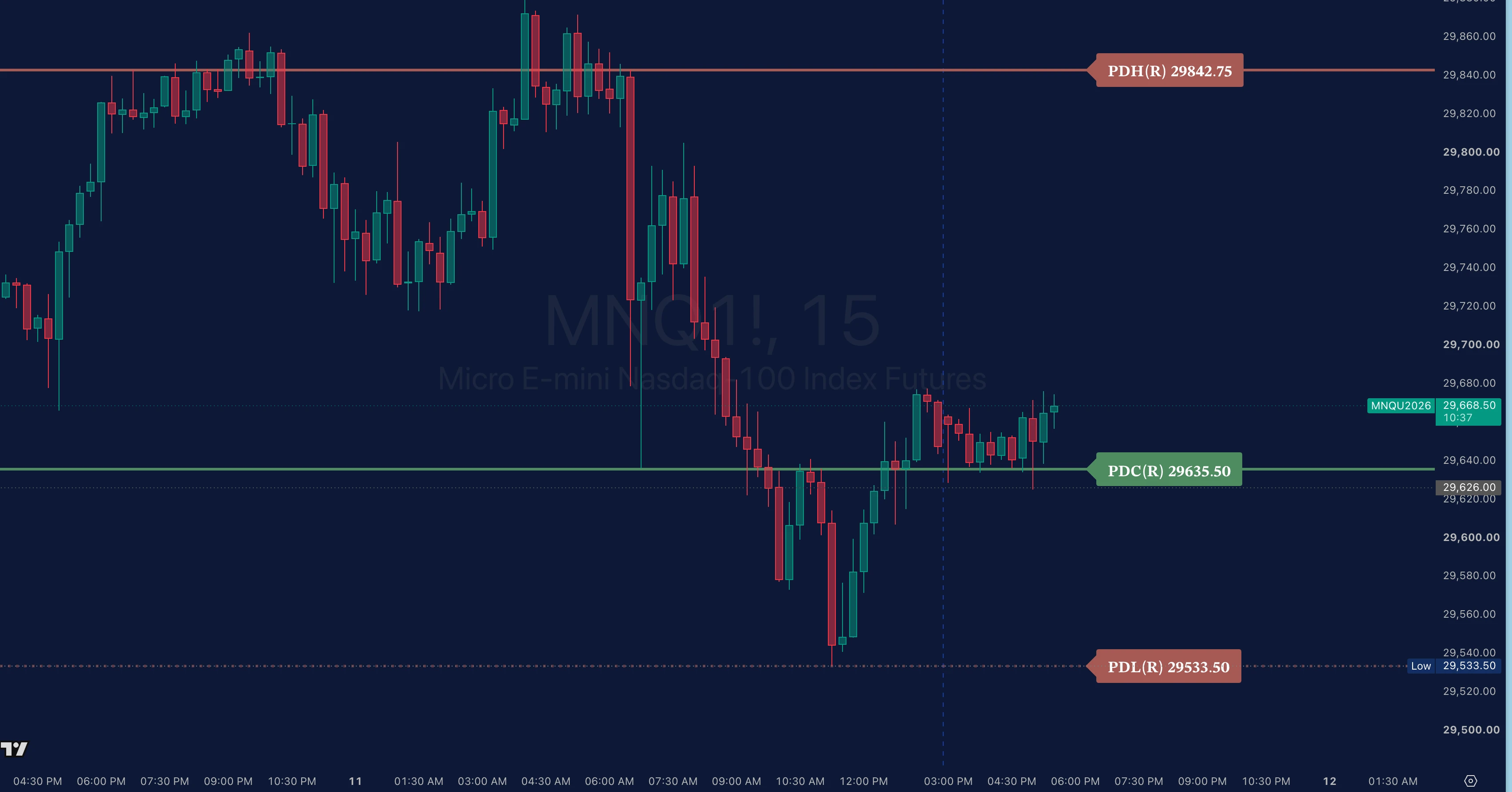
I built custom TradingView tools that organize the technical information I care about: market structure, the price levels that matter, trend, momentum, and which of my setups is in front of me. The work I used to do by hand is done before I sit down.
The research arrives sorted
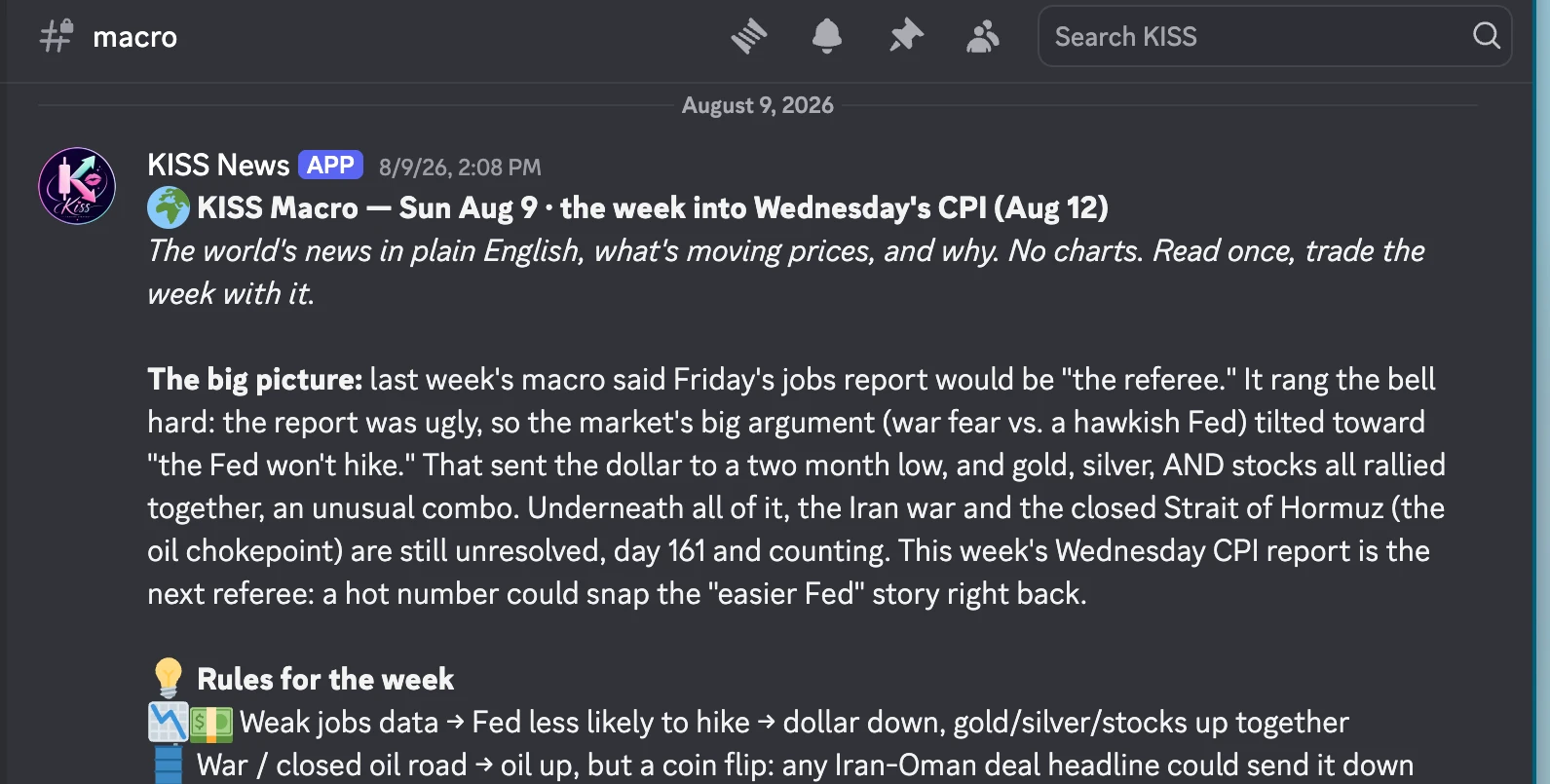
I also built an AI research agent that reads the week's news and writes me a brief in plain English of what is moving prices and why. It arrives before the session, so I do not start the day reading for hours.
The journal grades the work
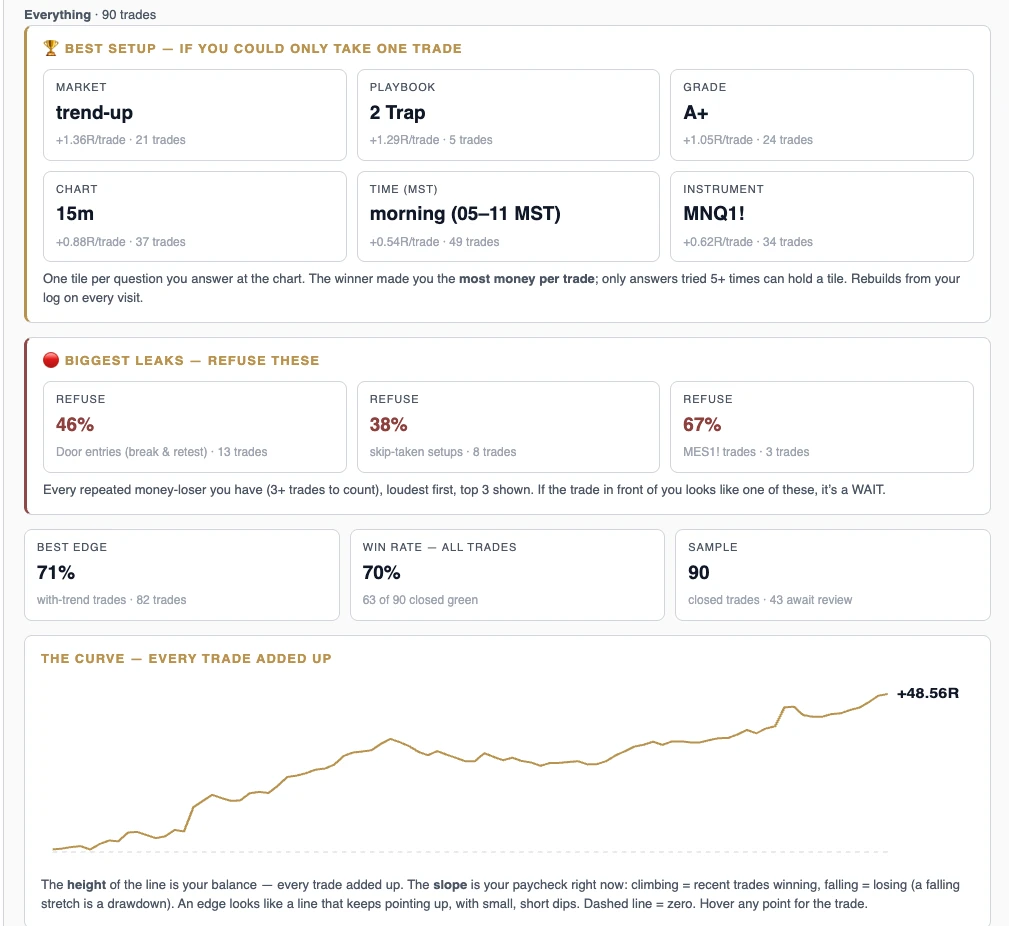
The third piece is my trading journal and analytics application. It records every trade, analyzes my performance, shows me which setups actually work for me, and shows me where I am following my rules versus where I am drifting from them. This is the piece that taught me my edge.
The system does not tell me what trade to take. It gives me context so I can make that decision myself.
The system says no
My rules used to live in my head, which is where rules go to get bent. Now they live in the tool. It checks the trade in front of me against my own limits and says the answer out loud, before I can click.
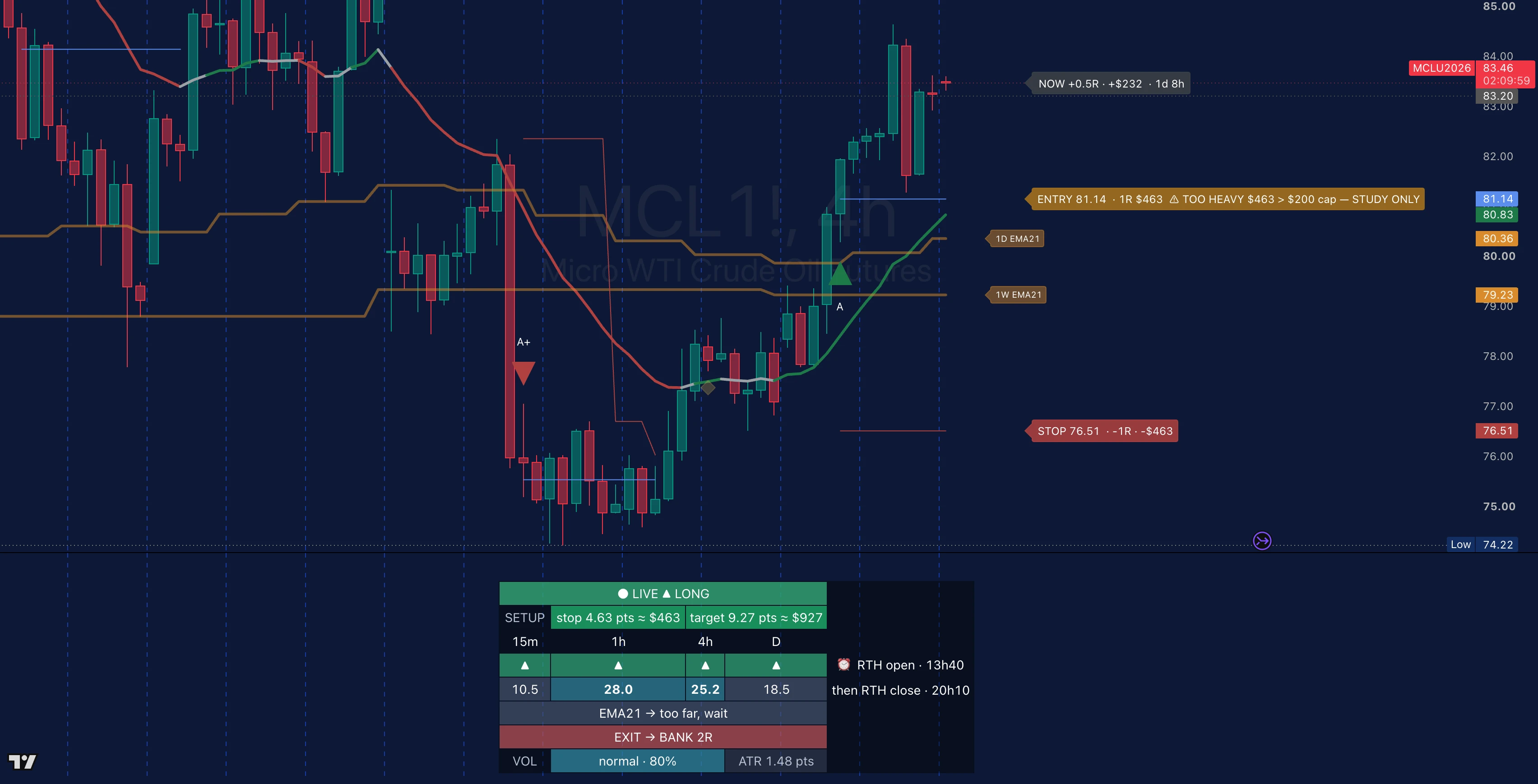
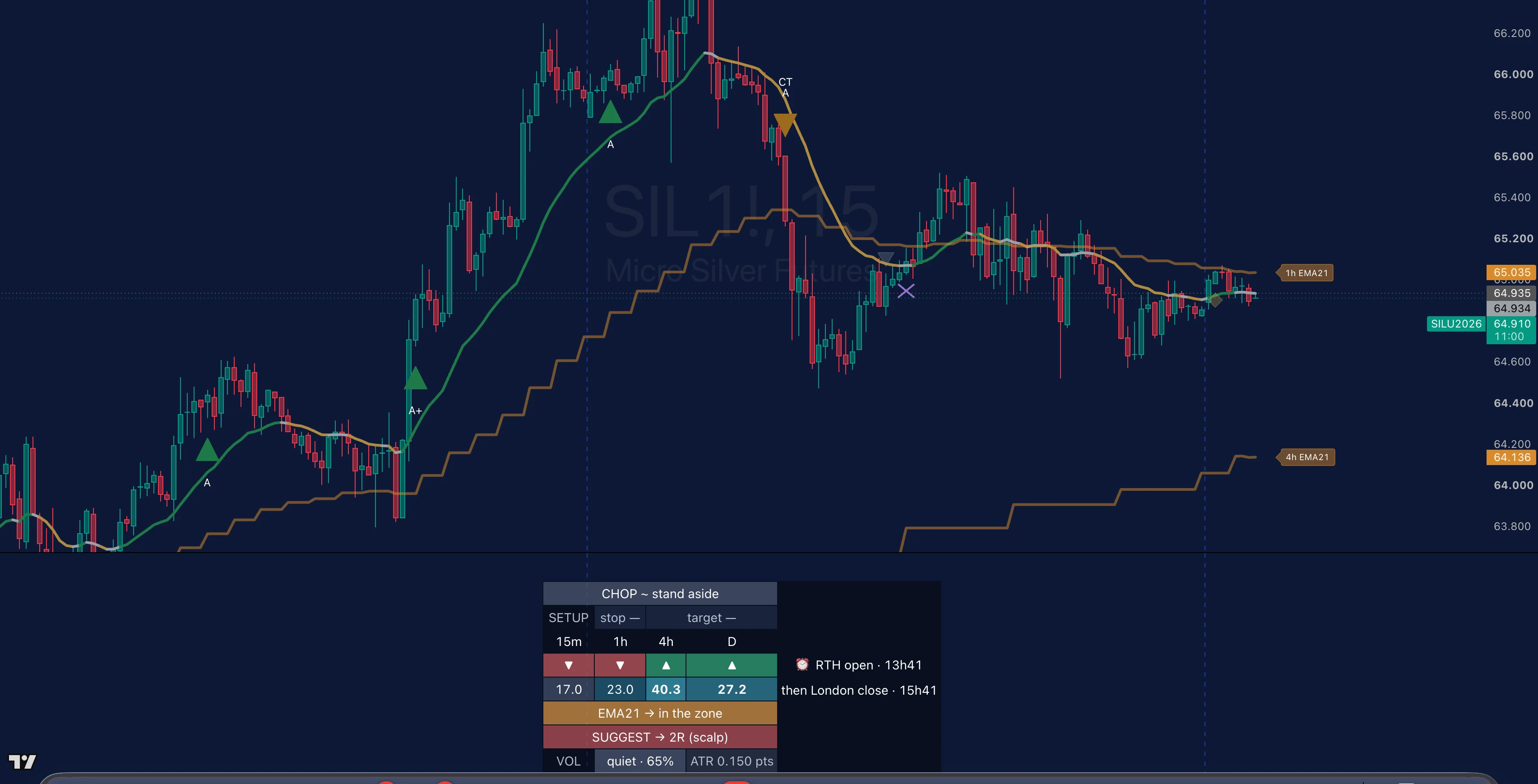
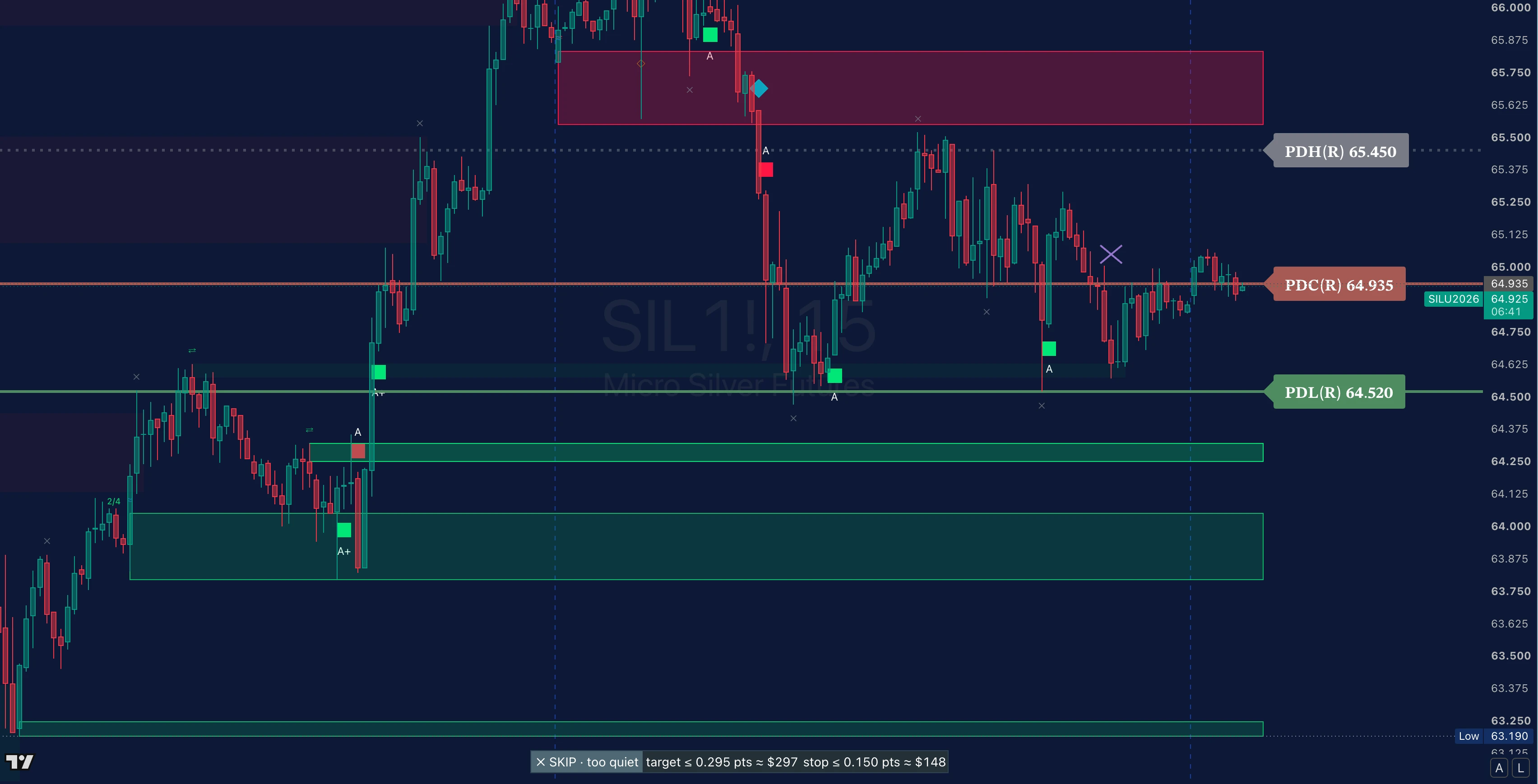
None of this is clever. It is my own rules, written down in a place where I cannot quietly renegotiate them at 9:30 in the morning.
What my journal shows me
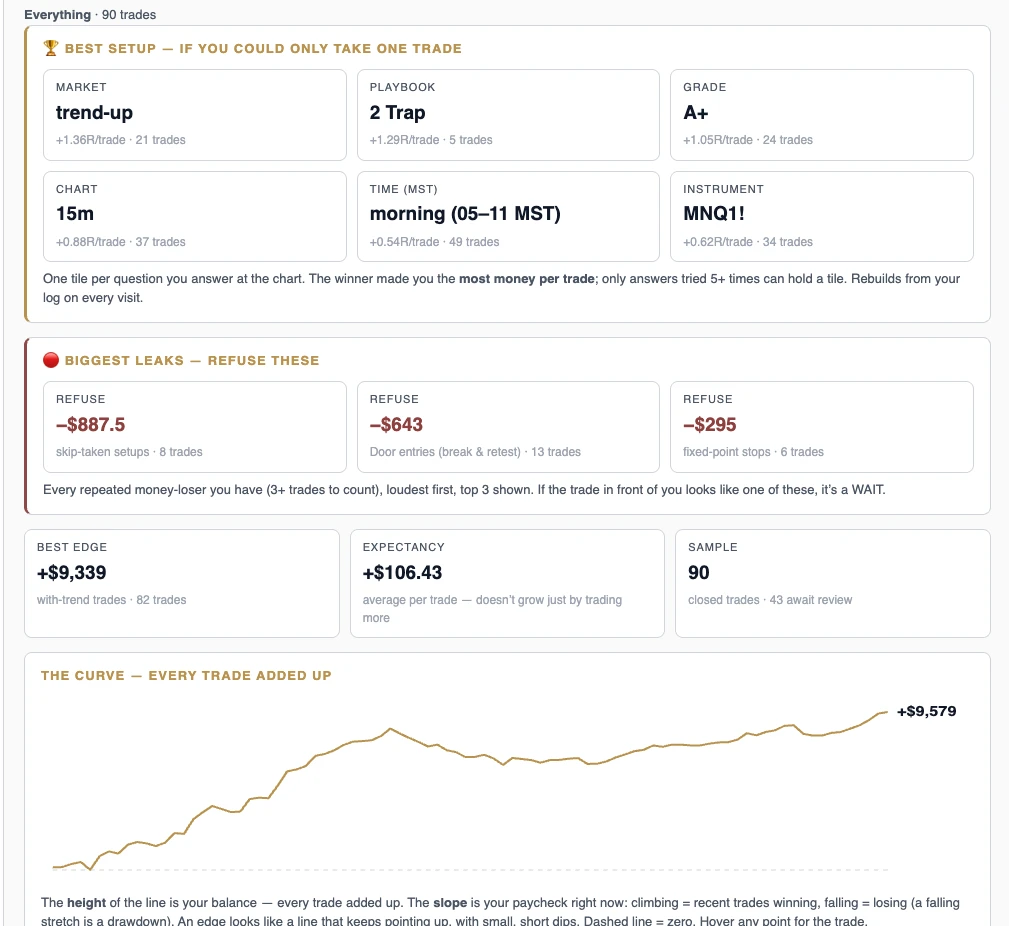
These are my own numbers, computed by my app from my own trade log. They are not broker statements, they are not a forecast, and they are not a claim about what anyone else would get.
70%
win rate, 63 of 90 closed trades green
90
closed trades in the sample
+$106.43
average per closed trade, my expectancy
+$9,579
every closed trade added up, to date
The same screen names my three biggest leaks and tells me to refuse them: entries I take on a break and retest, setups I had already marked skip, and one instrument I keep losing on. Repeated money losers, ranked loudest first.
I am still early in my professional trading journey, so I am careful not to present a short period of results as proof that I have solved trading. What I am proud of is the process I have built.
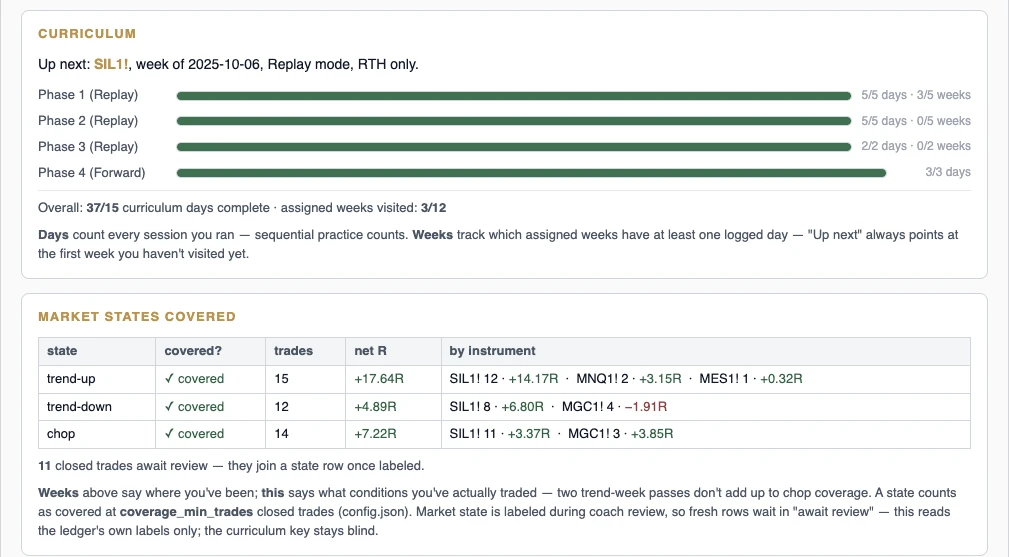
I stopped searching for the next strategy.
Before I built this, it was easy to believe the next coach, the next indicator or the next method held the missing piece. Now I have enough structure and data to refine what I already have instead of replacing it.
It also makes my mistakes much harder to hide. I can see when I am following my strategy and when I am drifting. I can see when the market is offering one of my setups and, just as importantly, when there is nothing worth trading.
The alerts mean I do not have to stare at charts all day. I can step away and come back when the market reaches conditions that deserve my attention. I wanted trading to fit into my life, not consume it.
Then the system passed a test I did not grade. I passed my prop firm evaluation. Same rules, same log, same tool saying no when the trade was wrong. It does not make me a great trader. It says the process holds up when someone else keeps score.
That is the transition I care about most: moving from thinking like a gambler who watches the dollar sign to thinking like a professional trader who watches the statistics.
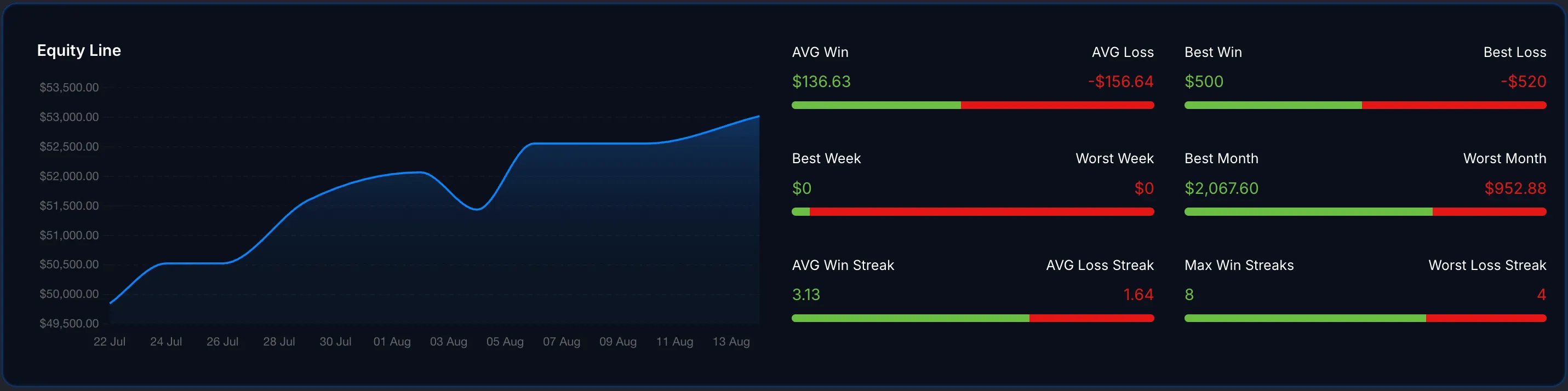 Simulated evaluation account
Your version of this exists too.
Mine happens to be trading. The shape is the same in any business: you already know how the work should run, the repetitive part around your decision is eating the day, and the good tools out there are shaped around someone else's way of working, not yours.
The goal was to automate the repetitive work around the decision so I could spend more of my energy on the part that actually requires judgment.
- 1
You tell me how your work actually runs, and which decisions only you should be making.
- 2
I build the smallest system that takes the repetitive work around those decisions off your hands.
- 3
You own it, you use it daily, and it keeps showing you where your edge is.
You bring the idea and the expertise. I help turn it into a system.
Tell me how the work runs today. If software is not the right answer, I will say so on the call.
For the engineering reader. Three systems, built and maintained by me, with one rule sitting at the center of all of them.
Chart layer
Two indicators in Pine v6. One builds a heads up display: market structure, trend and momentum across timeframes, setup grade, volatility, and the stop and target in dollars for the size I am carrying. The other draws the previous day's high, close and low. Both fire alerts, so watching is optional.
Research layer
An AI research agent reads the week's news and the instruments on my watchlist, then writes a plain English brief of what is moving prices and why and posts it to my own Discord server before the session. It is the research layer between the chart tools and the journal, and it makes no trade calls.
Journal and analytics application
About 10,000 lines of code, all of it mine. Risk and rule logic lives in one domain layer rather than being scattered through the UI, and it is covered by 13 test suites, because a rule engine that is quietly wrong is worse than no rule engine at all.
The human executes every trade
It is written in the README because it is a design constraint, not a preference. Nothing auto executes. The system prepares, measures and refuses. The decision, and the click, stay with me.